Saturday, September 17, 2011

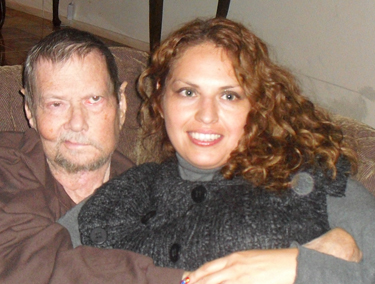
Eulogy for Ebbe

Ebbe Skov was diagnosed with multiple myeloma, an incurable, universally fatal cancer, in 1999, less than a year after I was. In such a horrible context, it was great good luck that I met him and his devoted wife Margrit at a local support group meeting. A difficult journey into a strange and terrible land is always easier with amiable companions, and he was certainly that for me: always cheerful, supportive, objective, and reliable. He belonged to a like-minded group of us who fought the disease together in a similar way: now, I’m the only one of us left.
We were scientists who fought our disease like scientists. Ebbe read every relevant journal article he could find; plotted the mathematics of his disease on charts and spreadsheets; and knew his options better than his doctor, whom he doggedly tried to educate. He did his homework, which many of us are unable or afraid to do.
Ebbe managed to be vigilant without being afraid, which is a rare accomplishment. I’ve never known anyone who monitored his condition as closely as he did, which, for him, was a requirement. While most of us have bone tumors which are easy to sense, because they hurt, his could be anywhere, symptomless: around the throat, over the heart, or in any soft tissue. He was regularly besieged by them.

Yet throughout the ordeal, I found his spirit to be truly remarkable. Fear did not bend or break him as it does so many others. He did not panic, nor did he feel sorry for himself: I never heard him say, “Oh, woe is me,”  “This is so unfair!”, or a bewildered “Why me?” Instead, he donned his armor, polished his sword, and went after the Beast with everything he had. He fought an heroic battle despite knowing he would eventually lose: a rare man indeed, a leader and an inspiration to the rest of us who must follow.
My theory is that the bravest and most successful cancer warriors have the support of a strong woman, and Ebbe certainly had that. Despite the heavy bludgeoning of fate, Margrit was forever beside him, loving him, lending her strength. As a result, he lived more than twice as long as most of us do.
My personal journey will be harder now without him. Good bye, Ebbe, dear friend!

Tuesday, September 13, 2011

Once more unto the breech, dear friends, once more

This morning I was up early despite having a restless night. My second-floor bedroom opens unto a small balcony. I listened to the birds at the feeder about ten feet away: it hangs from a nail under the eaves. Actually, what roused me was what I was not hearing: the raucous sound of finches, sparrows, doves, and the occasional scrub jay squabbling over the six prime feeder positions. (Although at first glance they appear to be fighting, their beak-to-beak pecking is stylized: they are careful not to do each other any real harm.)

Then I realized I hadn't filled the feeder last night. As quietly as I could manage it, I slipped out of bed, put on my shoes, and slowly and carefully opened the screen door: I didn't want to wake Ivonne. I keep a weather-proof box of black-oil sunflower seeds on the balcony. A full feeder barely lasts one day. I failed, though, to be sufficiently stealthy to avoid rousing Ivonne. But, now, after doing a full St. Anthony, the normal, meaningless, and quite satisfying sound of dozens of birds once more enhances my morning bagel and coffee.

I absorb myself in an article in today's New York Times that seems to herald the end of the manned-space era. A couple of weeks ago the Russian cargo ship, a Soyuz, crashed on its way to resupply the three astronauts who struggle, some would say vainly, to do meaningful science in low-earth orbit. For safety reasons, the leaders are discussing bringing them home. What do you think: if we come home, will we ever go back?

Reality is crashing in on the science-fiction dreams of my boyhood. What can be reasonably done has been done. We won't be traveling to distant planets, or warping time and space: we're stuck here and have to make the best of it. The landing on the Moon in 1969 was our high point as a species, literally and figuratively, a triumph of technology and imagination. Mankind had been wanting to go there since the first human looked up from the ground, agape, at the night-time wonder of it. We not only achieved that ancient dream, but, being Americans, after all, we broadcasted it live on TV. Nothing we can imagine could possibly top that, not even Texas' plan to show its executions on pay-per-view.

TREATMENT TIME
Hope is not a strategy. I'm not one to sit idly by, hoping that things will get better. But I'm also as prone to denial as anyone else, especially when the vicissitudes of life are largely resistant to my control. While I killing time and powerful space aliens in Duke Nukem Forever, my light chain numbers, which, for me, measure cancer activity, are rising. Take a look at my latest post-transplant chart:

Click above for bigger and interactive version
The red line, which is my kappa, is now at 84.8 mg/dL, the highest it's been since the transplant. The nadir, 15.3, occurred in March. For someone who, pre-transplant, withstood a spike of 2140 (normal is 1.94), I'm not rushing out to buy a cemetery plot, but I am afraid: once more I must work through the inner process of drowning it in the bathtub. To rely on hope would be expecting to see a spontaneous drop in the future: after all, as you can see from the red line, the value has risen and fallen on its own more than once since the allogeneic transplant. However, what I'm seeing now looks more like a trend than a seesaw: the numbers have been rising since late May. The faint black line is a computed kappa trend line: no complicated analysis is needed.

One of the most difficult challenges in fighting cancer, especially one that is generally incurable and usually fatal, is to decline to ride the prognosis roller coaster that careens from denial to despair and back, pausing at times for brief moments of elation. Not every change of state is meaningful: even when a change is meaningful, the normal emotions engendered by the swings don't help. Fear is cancer's natural ally. My slowly-proceeding book is, in part, how to disconnect the corrosive and often deadly effects of fear. Wallace Stevens said it best:

THE SNOW MAN

One must have a mind of winter
To regard the frost and the boughs
Of the pine-trees crusted with snow;

And have been cold a long time
To behold the junipers shagged with ice,
The spruces rough in the distant glitter

Of the January sun; and not to think
Of any misery in the sound of the wind,
In the sound of a few leaves,

Which is the sound of the land
Full of the same wind
That is blowing in the same bare place

For the listener, who listens in the snow,
And, nothing himself, beholds
Nothing that is not there and the nothing that is.

Ok, so shoot me, I was a Yalie English major.

It is necessary to be able to distinguish between change and meaningful change. Most of the time, as the emotional trolly follows the numbers, hauling us up and plunging us down, the whiplash is uphelpful. But as I stand in the full cold snow of Wallace Stevens, staring at the numbers, I have to conclude that I'm staring at a moment that calls for action. Knowing when you need to change course must be coupled with the other survival skill in the battle against cancer: being clear about what other treatments are available and likely to work. Everything else is irrelevant. There are a limited number of treatments (a handful); if you earlier had become resistant to a given treatment, returning to it later probably won't work; and clinical trials can waste precious time, often don't provide a benefit, and, rarely, can do actual harm. They are, and should be, the medical equivalent of a Hail Mary pass in football.

The battle becomes much simpler over time in that fewer treatments remain. At this point, all I have left is donor lymphocyte infusions (DLIs) and lenalidomide (because lenalidomide can fight the cancer without damaging my new immune system). But I became resistant to lenalidomide years ago, so why should I expect it to work today?

GVHD
Donor lymphocyte infusions will probably work, perhaps even to the extent of complete remission. After a long period of fighting, immune systems sometimes do the equivalent of redefining normal: they give up the fight, which is what is happening inside me now. DLIs will reinvigorate the immune system to destroy the malignant cells. However, while ratcheting up the graft-versus-myeloma effect, they generally also considerably ratchet up the graft-versus-host disease, which, for me has been thus far quite manageable. Take a look at how bad GVHD can get. Click on it for a really good look.

GVHD can attack anything: eyes, mouth (one of my friends lost a few salivary glands), toe and finger nails, GI tract, connective tissue, you name it. After DLIs the GVHD is usually more than mild and can be life-threatening.

The other downside is that steroids are the usual treatment for severe GVHD. If you've been following this blog, you know how easily steroids can drive me to the brink of insanity.

So, that's where I have to go next. In early September, my doctor and I will discuss going back to my donor for another shot at cure. I think he wants to try lenalidomide first, but that will take a lot of convincing.

The good news is that I won't have to endure once again the horror of last summer: four months in hospital; eighteen days in ICU; extreme weight loss; difficulty eating (even jello tasted vile); and life-threatening complications (I had pneumonia, kidney failure, deliria, heart irregularities, and a massive GI infection). I'd hate to have to repeat that experience. But, again, the DLIs are quite likely to work against the cancer, and, who knows, I might get lucky with respect to the GVHD. Yin and Yang, profit and loss, left and right, GVHD and GVM: no pain, no gain (or, as I say to my athletic friends, no pain, no brain).

THAT CENTER DIVIDER MOVED!
Today I am $16,000 richer and immeasurably poorer, after State Farm totaled my beloved Mercedes SLK320. I am trying to be philosophical about losing a car that provided the most fun possible to have on four wheels (although teens would not like the absence of a back seat). In pristine condition, with but 59k miles on the odometer, this 2001 beauty could accelerate and corner as excitingly as any stock car ever made: the horsepower to weight ratio was enormous. On top of that, I loved that it could switch from a being hardtop to a roadster in 23 seconds at the push of a button: I could do it at a stoplight if the weather changed. The inside was all leather and burled walnut: even the steering wheel was made of gorgeous wood.

I really don't know how I managed to destroy it. Was it a senior moment? My eyes have deteriorated considerably in the last decade, due to botched lasik in the right eye coupled with annoying floaters and a posterior staphyloma: maybe I didn't see the center divider because I couldn't see it in the shadows. I wasn't going fast, just normally accelerating from a stop light on an unfamiliar but complicated road, trying to make a turn. Wham! Oil on the ground. Au revoir, Mercedes.
When I was a child, I talked like a child, I thought like a child, I reasoned like a child. When I became a man, I put childish ways behind me.
With four children, what I actually need is a six-passenger car, like a Honda Odyssey, not the two-passenger babe magnet that I had. It's not what I want, it's what I need. Doesn't that suck! I hated wondering how, with the Dow Jones falling like a skydiver whose parachute didn't open, I was going to afford a down payment: now I have one. I could have tried to rescue the Mercedes from the boneyard, but it's time to do the mature thing. As a result, my inner teen is screaming.

Fate has a sick sense of humor. After diagnosis, when I could no longer work and was surviving solely on private disability insurance, a man who owned an air ambulance company whacked me on my motorcycle in 2003, putting me in a wheel chair for eight months and making me $1.6M richer. I had wondered how I was going be financial secure before the cancer got me. Thanks, Fate—next time, let me win the Lotto instead! (I did salvage the motorcycle: it's in my garage needing a bit of work. The trouble is, I'm getting to be too old and too slow, and the neuropathy in me feet is so bad, that I can't ride it safely except around the block. Ratz!)

Words of wisdom, the first from my Computer Science professor: "He who matures last, matures most." Well, I am today reaching heights of maturity that really and truly bite. Maturity is, after all, the consolation one receives from abandoning ones goals. But, more than that, aging coupled with the a prolonged fight against a deadly illness is marked by a succession of losses: work, which defines most men; youth, which spurs you to climb mountains and lane-split on motorcycles; the future becomes more confined and more restricted, giving the lie to Robert Browning's, "Grow old with me, the best is yet to be" nonsense; losing the sense that there's plenty of time left.

[Pow!] [Bam!] [Wham!]

Ok, after slapping myself around a bit, I am reminded about how lucky I truly am: a succession of near-miracles has made me happy despite what fate has rained down on me. First, I'm still here: isn't that amazing! Second, I am happily married to a beautiful woman half my age and, at long last, being the good father I couldn't be in my first marriage. Did I mention I'm adopting the children? Shazam, instant little citizens of the US of A! I haven't run out of ammunition in fighting the cancer. My mind is sound: recently I've memorized another Beethoven piano sonata, relearned the guitar (I was a folk singer long ago), and have written a good chunk of my book (which is turning out to be an autobiography). More than a year later I'm still weak, but I am lifting weights at the gym regularly. Ivonne and I are warm and successful.

DESTITUTION IN SIGHT
I'm well enough now to go back to work, and I need to: I have four teenagers who need braces and college educations! So I sent my résumé out into the world last month only to be greeted with a resounding silence. I'm practicing my technical skills ("Good morning, Walmart shopper!"). Maybe I can get an advance on my book (hahaha!).

Rarely is the financial disaster of cancer discussed: I think this omission is a matter of masculine pride. With disability insurance, Medicare, a small pension from General Dynamics, and the motorcycle settlement, I didn't need to worry about money: statistically, I expected to be dead long before I ran out of it. Yet, here I am, thirteen years into the fight with no end in sight, with a young wife and four adorable kids. What happens to me and my family when my house, which still has some equity in it, goes under water, my mutual funds tank, and my credit is exhausted?

I don't want talk about it. I don't want to even think about it. But ever looming in my mind is the distant specter of destitution: come visit me and my family under the I-5 viaduct at Mercy Road!

Ok, enough of the maudlin BS. I've been lucky thus far: something will come along. Some major corporation will have the good sense to hire me, my book will be a resounding success, and the DLIs will cure the cancer once and for all. And, yet, I am haunted by these words, with which I am sure you are familiar:


Stopping by Woods on a Snowy Evening
By Robert Frost

Whose woods these are I think I know.   
His house is in the village though;   
He will not see me stopping here   
To watch his woods fill up with snow.   

My little horse must think it queer   
To stop without a farmhouse near   
Between the woods and frozen lake   
The darkest evening of the year.   

He gives his harness bells a shake   
To ask if there is some mistake.   
The only other sound’s the sweep   
Of easy wind and downy flake.   

The woods are lovely, dark and deep.   
But I have promises to keep,   
And miles to go before I sleep,   
And miles to go before I sleep.


PS: My wife just told me that the Spanish translation of the title of this post reads: "Once more into the ass, dear friends, once more!"

Monday, August 22, 2011

A Letter to my Donor

Contact between a marrow donor and the recipient is tightly controlled. At this point, though, I can write to my donor just so long as the letter contains absolutely nothing that can identify me. This I have done, and I'm sharing it with you now.
Monday, August 22, 2011
My Dear Donor,

I have hesitated to write to you because, no matter how hard I’ve tried, I can’t find adequate words to thank you for saving my life. You’ve given me the greatest gift one person can give another. A spontaneous rescue, such as a bystander giving CPR, is a wonderful act, but donating in the way you did is, to me, an even greater act of generosity: without immediate motivation, you decided that donating was something important for you to do, and you made a considerable effort to do it. You won’t be written up as a hero in the local newspaper, like the quick-thinking bystander might be: yet what you did was greater—a deep, pure and unselfish act of the highest goodness.

I would not be alive today without you. Last year, I was nearing the end of a twelve-year battle against a generally incurable, universally fatal cancer. There was so much of it, there was no way I could have survived longer than a few months. Yet, here I am, more than a year later, looking great, weight-lifting at the gym, and making long-term plans. I wasn’t cured, but the cancer was dramatically reduced to a manageable level.

It took a long time to find you: apparently, and surprisingly to me, there was something unusual about my blood that made you hard to find. When you were found, and volunteered, they had searched for months and I had reached the end of my rope.

Of course, I didn’t want to die, but more than my survival was at stake: I’m married and raising four teenagers (three girls and a boy) who endlessly delight me. Although they are my step-children, I find myself loving them beyond all reason. One of my most unhappy recurring thoughts was imagining how much my death would have hurt them: they need a good father, and I’m trying my best to be one with some success. Thank you for making it possible for me to continue taking care of them.

The transplant was difficult. I spent four months in hospital, including eighteen days in Intensive Care: I nearly died three times. I came out fifty-five pounds lighter (no fat, little muscle). Recovery took more than seven months. During my hospital stay, my wife was with me, night and day. She took care of me as much as any of the nurses, even sleeping in the second bed in my room. We are very close, and neither of us had ever before had such happiness in a relationship. We are in love: thank you for letting us continue enjoying each other. I hope some day that you and I will get to know each other, and that you might meet my wonderful family.

I used to be of one blood type, but now that your blood flows through me, I have your blood. Since you moved in, my nails have gotten thicker, my hair, which had started to gray, reverted to my childhood light-brown with reddish highlights. You’ve renovated your new home, and I like the improvements. You’re a great roommate!

With inexpressible gratitude, I sign myself,

Your Living and Loving Recipient


Saturday, July 16, 2011

A Matter of Perspective, and a Potpourri

TOPIC 1: PERSPECTIVE
Click above for a bigger view
So, thirteen months after my allogeneic transplant, how am I doing? It all depends upon how you look at it. I update this chart whenever I get new labs: looking at the data in this way emphasizes historical trends; reveals the "big picture"; at times, it even offers a glimpse of the future. (Unfortunately, learning to use Microsoft Excel to produce these charts can be maddeningly difficult. It's worth the trouble, though, if only to garner the admiration of the many who have tried and failed.) The red line is the most important for me to watch because I have light chain disease of type "kappa": in my case, it's the only useful marker obtainable through ordinary lab tests. (The terms of light chain disease, kappa and lambda, sound offputtingly mathematical, but the first initials of the last names of their discoverers are—wait for it—"k" and "l".)

The chart begins one month after the transplant began and extends to last week. Normal, for kappa, is 1.94 mg/dL. My most recent measurement was 35.9: am I in trouble? 

The Long View
Same data, but beginning two years ago. I've marked the day Ivonne and I married and the day my transplant began. For the record, the high point on the chart is 2140 mg/dL, a positively frightening number—it's amazing to me that I could have tolerated such a high tumor burden for as long as I did, and, because I had virtually no immune system, that I didn't die from an opportunistic infection. This longer-view chart is far more reassuring than the first one. From its perspective one can easily conclude that the variations seen in the first chart are, as engineers say, "in the noise": my condition has not significantly changed since the transplant. I am "stable." At the moment, I have nothing to worry about. Should this situation change—and it might never change—I still have options (lenalidomide, which helps the immune system fight the cancer without being damaged by it; donor lymphocyte infusions, which rev up the immune system's ability to attack).

This week, then, I sent out my first job-hunting feelers: one of my four teenagers needs braces; all four need to be sent to college; they eat their way through more than thirty eggs a week and countless gallons of milk; and don't even talk to me about iPads! They may have come from one of the poorest cities in Mexico (Tijuana), but, boy, did they ever pick up the technology in a hurry—dammit, niños, read a real book!

What's going through my mind? After a long session of pulling the African Queen through dense reeds, Bogart discovers that he’s covered with leeches, which he hates. Frantically, he and Hepburn use salt to remove them. Then comes one of the poignant moments in cinema: he realizes that despite his disgust he must go back into the water if they are to survive. Tellingly, Hepburn looks at him with a heavy heart but does not protest: she's no fool.


TOPIC 2: HAT TIP
Hat tip to Dr. Rahul Naik for deciding to go into myeloma research! He's working on a way to make Velcade (bortezomib) more effective.

TOPIC 3: FAMILY ADVENTURES
The whole family went to the Zoo last week. You might enjoy this picture of us. I really need to buy shirts that fit!

Nahomy, Jared, me, Ivonne, Sharon, and Ruben
Sharon and Ruben are spending a few days with their friends in Mexico. Jared decided to stay home, telling her mother, "I'll stay home because my role in the family is to make Lonnie's life miserable." She teases me constantly: she really is adorable.

TOPIC 4: THE BIRDS (THINK HITCHCOCK)
The bird feeder was up only one week before the scrub jays found it! They may be bullies, but they are fun to watch. Also, the first raptors have appeared: a peregrine falcon was spotted by my children eating one of the birds I've been feeding. My cat routinely splats herself against the glass door by the feeder trying to catch one—in pig latin, she's otnay ootay ightbray. My feathered friends are going through twenty-five pounds of black oil sunflower seeds a week. They make me smile.

TOPIC 5: FOURTH OF JULY MUSING (BELATED)

The New Colossus

Not like the brazen giant of Greek fame,
With conquering limbs astride from land to land;
Here at our sea-washed, sunset gates shall stand
A mighty woman with a torch, whose flame
Is the imprisoned lightning, and her name
Mother of Exiles. From her beacon-hand
Glows world-wide welcome; her mild eyes command
The air-bridged harbor that twin cities frame.
"Keep ancient lands, your storied pomp!" cries she
With silent lips. "Give me your tired, your poor,
Your huddled masses yearning to breathe free,
The wretched refuse of your teeming shore.
Send these, the homeless, tempest-tost to me,
I lift my lamp beside the golden door!"
— Emma Lazarus

These words, our sacred, national words, have graced the Statue of Liberty since October 28, 1886. This Fourth of July I couldn't help but admire those who so long ago held this vision of America. Many cite these words to make the case for American exceptionalism. Some say the idea that we are a welcoming, big-hearted people has always been a myth, but I don't believe that despite recent events. We have always been the most diverse of nations, and this diversity has blessed us with unparalleled strength and resilience. In time the new immigrants will be absorbed, as earlier waves of immigrants have been absorbed, and we will be even stronger because of it.

TOPIC 6: MUSCLES!
Or, rather, the lack thereof. As I've mentioned before, I lost 55lbs of muscle and fat during the allo. When I finally came home I had little of either. That's not an exaggeration. There wasn't much I could do for myself: I couldn't put on my clothes, take a shower without risking my life, go to the bathroom, or move from my bed to a chair. I couldn't put on my shoes. I couldn't roll over on my stomach. After the allo I had nothing—except my life.

Don't I Wish....
Now I'm hitting the gym three times a week, and, after the first time, going by myself. I'm doing what an experienced lifter does, but with almost no weight. Yet I'm getting stronger and feeling better (I prefer weight lifting to psychotherapy: unless you're terribly neurotic it works faster). My greatest disability is the lack of strength in my legs; however, I can notice an improvement already. I very much hope I don't hurt myself. I avoid any exercise that compresses my spine, but if I use my damned head I can work most of the other exercise machines. I can't warm up with the rowing machine, though: I'm afraid if I get down that low I won't be able to get back up without help.


TOPIC 7: BIG HAT TIP
I am alive today because of the determined efforts of Dr. James Mason of Scripps Clinic. The allo was his idea. There were numerous complications in addition to the medical ones, many of them administrative, many involving insurance, all of which he handled adroitly. Recently he became Chief of Staff. He well deserves it. Many of my other doctors have been absolutely first-rate—Dr. Joel Bernstein has taken excellent care of me for thirteen years—but, in the end, I continue to breathe because of Mason.

I've been the undeserved beneficiary of many miracles, most of which I've chronicled here; but the biggest factor in my survival might very well be the chance consultation with Dr. Mason years ago. He taught me about my disease and its treatment: he did not have to do this, but for years he made time to answer all of my questions —and, as I am sure he would attest, I usually had a boatload of questions. He is the only person who has ever made me regret not considering a career in medicine.

I am proud to call Jim my friend as well.

Tuesday, May 31, 2011

Birds!

The Western Scrub Jay
This weekend, after a five-year hiatus, I restored one of my backyard bird feeders. San Diego can't support an abundance of birds naturally: it's near-desertic (in rain, not in temperature), so food is scarce. Because I am insanely in love with all birds, as you know, for years I fed them with three giant seed feeders, suet, and red syrup for the hummers. Because I fed them what they truly like, black oil sunflower seeds, they didn't just stop by for a visit, they moved in. The population built up, starting with sparrows and finches, then with larger birds like the fun-to-watch bullies of the back yard, scrub jays. Over time, a full avian ecology was going in my back yard. Generations of jays and others would nest around my house. Eventually, the raptors arrived. It was not at all unusual to spot peregrine falcons eying my back yard as if it were a restaurant while red-tailed hawks swooped in for lunch. Every January or February, mallards still swim in my little pond for a few weeks, their hind ends and feet pointing high in the air with the rest of them nibbling under water. I've seen no ducklings yet, but I keep hoping. Once in a while, a fleet of crows sweeps in like fighter jets, screaming and fighting and chasing all the other birds away. I loved it.

A Norway Rat
But then there was the autologous transplant in 2005, which for a while left me too weak to feed them myself. Also, what birds like to eat, so do the rats (all part of the ecology, alas). Although I had rat preventers on the lower-floor feeders, birds are so messy that much of their food ends up on the ground. Hence the rats. It became so bad that if, about an hour before sunset, I shook the large ficus benjamina by my back door, a half-dozen rats would jump onto the ground and scurry away. In time, they found a way to nest in my attic, which, although large, is a chore for me to get into. Countless times I had to carry a big ladder up the stairs, dislodge the ceiling door, and set the traps with a combination of bacon and peanut butter (after removing the dead rats, of course). Ewww!

So I stopped the feedings, and, in a couple of years, my back yard reverted to its original state (i.e., few birds, all small, no rats).

This weekend, though, I couldn't stand it any longer: I needed birds! The sliding doors of my upstairs bedroom open onto a small deck which is seldom used (well, it is fun to put a telescope up there and watch the neighbors hurriedly close their blinds). Today, the first full day of good weather, the birds found the feeder. At the moment there are twelve of them split evenly between the feeder itself and the deck beneath it. Just sparrows and finches so far, but the crowd is building. I'll let you know when the first jay arrives, and when the first hawk decides to eat him.

Sunday, May 8, 2011

Rosebud

Hatched May 1985, died November 3, 2008
Rosebud was my constant companion for twenty-three years. Where I was, he was. Rosie, in this picture, is on a cast-iron perch at the foot of my bed. The perch had to be made of cast iron because Rosebud was so heavy — there were nearly five pounds of him. He flew more or less like a bowling ball, although, when he flapped as hard as he could, there was a small gale in the house. He was more than a yard in length. One of his tail feathers, which I've kept, is more than two feet long. His talons were so large they wrapped around my wrists.

Rosebud was a Ruby macaw, a rare cross between a Scarlet and a Greenwing. They don't cross in the wild although there are places where they flock together. There are only a handful in the world.

He inherited the best features of both breeds. His cheeks were feathered, like a Greenwing. He had the bright yellow of a Scarlet. His red was greenwing deep, not like the washed-out tomato red of a Scarlet. Despite his great size, he was of gentle disposition, unlike the usual Scarlet, although he had strong likes and dislikes when it came to people. If you were one of the few people on his hate list, it was wise to keep your head away from him — one of my housekeepers had to have stitches in her ears twice. Very few creatures were on his bad side, but if they were, it was permanent.

He was subject to deep passions. In particular, he fell insanely and instantly in love with every black woman he ever saw. He was particularly enamored of one of my former housekeepers, also named Rose. When she would walk into the room he would practically fall off his perch, then would do whatever he could to attract her attention — scream, violently ring a bell that hung from his ring stand, flap his wings, say "hello" at the top of his voice (which, by the way, could be heard for miles if he decided to go all in). After getting on her arm, he would happily stay there for the rest of the day were she to allow it. He was completely heterosexual. He loved me, but I was Daddy, and that's different.

Rosie and Rosie
Other parrots mimic the voices they hear, by the way, but macaws are different — they have their own voices. Rosebud's voice was deep, as you might expect from one so large. He wasn't a great talker, but when he did talk he was amusing. I liked to occasionally blow his mind by taking him somewhere, like a hardware store. If he saw something that frightened him, he would babble softly like a baby in a stream of indecipherable words.

Rosebud was a hand-fed baby. Incubated, when he was hatched he was raised by humans as a human, fed with such foods as Gerber's baby food with a special spoon and plastic eyedroppers. (He loved cereal all his life.) I still have the spoon. Just like a human baby, he had to be fed every few hours around the clock. When I got him he was weaned to solid foods but still needed to be spoon fed for a few weeks. That's how I became Daddy. Such birds make wonderful pets because they have no fear of humans. In fact, in their birdly minds, they are humans. I'm sure he thought my plumage was ugly.
I had no intention of buying a bird at the bird store — I was buying food for another bird (a pain-in-the-ass wild macaw that I tamed who was named Merlin). When I first saw Rosebud he was covered in pin feathers, like a miniature porcupine, with practically no tail. The owner was handling him. After the Devil whispered in my ear, I asked the owner, may I hold him? In a trice Rosebud was on my forearm. I thought to myself, wow, he is everything I've ever wanted in a macaw. (I've adored macaws above all other birds — and I love every bird on this planet — ever since I was a little boy and saw my first macaw at Parrot Jungle in Miami.) So what did he do? He tightened up his claws on my sweater, leaned against my chest, and fell asleep. Adorable. I tried to get out of that store without buying him but I couldn't do it, nor he wouldn't let go of me. He was so cute! In a way, he bought me as much as I bought him. So about $2,500 later, not counting a monster cage, perches and stands, and horse-like quantities of food, I had the bird of my dreams.

I loved to take him places, in part because his mind needed periodic blowing and in part because the reactions of other people to seeing him were always delightful. Adults often would try to pretend that there was nothing strange about seeing a man with a gigantic, gaudy bird on his shoulder in a store, but kids had no such reservations. They would run up to me and immediately start peppering me with questions. What is that on your shoulder? Does he have a name? Does he talk? Can I touch him? Does he bite? To that last question, I would always respond with an enthusiastic, "Yes! He especially likes to bite off the fingers of little children!" Not that he would, of course. If upset enough, though, he could bite through a broomstick. His head and jaws were massive.

One day, my friend Kent and I took him to a dump that served a tolerably good beef sandwich. At the register, the buxom cashier saw Rosebud, then said, "You can't bring him in here!" I replied, matter-of-factly, "He's a seeing-eye bird." No further questions. Rosie sat with us on a chair back and ate bits of sandwich and fries. Rosebud especially liked Kentucky Fried Chicken. He'd sit on a chair back gnawing on a chicken leg grasped tightly in his talons, completely ignoring everything else. That was his way of protecting himself in an unfamiliar environment — acting for all the world as if it didn't exist and he was at home, on his perch. By the way, he was expert at cracking large bones open and scooping out the marrow.

But he was more than amusing, in a sense. Do you remember the old movie, Harvey? In it, Jimmie Stewart had an invisible giant rabbit friend, a pooka, that went with him everywhere. In one scene, in a bar, he explained how people in bars react to Harvey. What he said was equally true about Rosebud:
"They [the men in bars] tell about the big terrible things they've done and the big wonderful things they'll do. Their hopes, and their regrets, and their loves, and their hates. All very large, because nobody ever brings anything small into a bar. And then I introduce them to Harvey...and he's bigger and grander than anything they offer me. And when they leave, they leave impressed. The same people seldom come back; but that's envy, my dear. There's a little bit of envy in the best of us."
— Elwood P. Dowd (Jimmie Stewart), Harvey

So it was with Rosebud. Seeing him caused most folks come out of themselves for a few moments to appreciate him with a degree of wonder and awe. I don't claim that seeing him was life changing for everyone, but it certainly was for me.

One thing I liked about owning these magnificent birds was that they were likely to outlive me, having a possible lifespan of seventy or more years, although I felt guilty about feeling this way. While I wouldn't have to suffer the bereavement of losing Rosebud — he was, after all, like a son to me — he would be devastated by my death. To give you an example, one lady I know had to give up her bird due to unfortunate circumstances. She gave it to a new, loving home. One day, after visiting her bird at its new home, she had to leave. When she was in the driveway half-way to her car, the bird, who had never before said anything like this, yelled after her in a desperate tone: "I'm sorry!" These intelligent, passionate birds will break your heart.

A Scarlet, Sahara, playing peekaboo
And so it was with Rosebud. There was something a little odd that Monday morning. He wasn't paying much attention to his deep love, my housekeeper Rosie. He looked fine. After an hour or so I picked him up, wondering how he was. That's when I heard a gurgling sound during his breathing. It took me too long to panic, but, then, panic I did. I was racing with him out the door to the vet when he bit the holy hell out of my hand, fell to the front porch, and died in less than a minute, died in the most horrible way I could have possibly imagined, drowning in his own blood. All the way to the vet I tried to resuscitate him, but I knew there was no hope. A blood vessel had ruptured and had slowly leaked into his lungs.

I believe that there was nothing that could have been done for him even if I had caught on to his distress earlier (birds, when ill, hide it as a protective mechanism — they don't want others to see their vulnerability). Even had this happened in the arms of my dear bird vet, Jeff, there was nothing that could have been done. I passionately believe that. And I'll tell you why. Because the alternative is unthinkable.

I made a casket for him some forty inches long out of six-inch heavy plastic pipe capped at both ends in order to be both air and water tight. Inside I put the bell he rang so often when he wanted attention, some of his other toys, a brief note from me, and a walnut. Every night of his life, at bed time, I gave him a walnut. One time I nearly ran out of them in winter and had to air-freight them from South America. After devouring it, he would climb to the top-most perch of his gigantic cage and go to sleep. There had to be a walnut in his casket.

I wrapped him in linen. He required a lot of linen. Rosie, my housekeeper and big-hearted friend, helped prepare him. In what might be considered heresy by some, I put on my full religious clothing — tallit and yarmulke, and said Kaddish over him.

Still, I could not bear to put him in the ground. I kept him on the floor of my dining room for about a year. He was still home, you see. His cages and perches were right where he had left them, as if, in my lunacy and grief, he might be coming back.

On top of that, his death was so horrible to see, he suffered so much, that I had a full-blown attack of post-traumatic stress disorder (PTSD) that lasted for about five months. PTSD is nothing like grief. PTSD is a high-definition DVD playing — I can't even say "in my mind" because it is more than that. It is a complete reliving of the event, like the most realistic dream possible to have, over and over and over. There was no controlling it. It tore me apart.

After a few months, I realized that to stop the recording, I had to describe what happened to someone else. Completely. Especially, I had to describe the last ten seconds of it. I tried and tried but couldn't do it. I would occasionally get farther in my attempts, but always stopped short of those last seconds. When I finally was able to get to the end, the PTSD was over.
Rosebud is buried beside the big tree on the left
Last year my friend Kent, who is a genuinely good man, helped me bury him on the hillside behind my house. I couldn't do much to help, actually. Mostly, I just sat there. Kent, in his wisdom and kindness, forced me to talk about Rosebud although I didn't want to do it, and talking about him helped me. Rosebud was finally put to rest. Because it was the rainy season, I asked Kent to put some large rocks just below Rosebud's grave so the rains wouldn't uncover him. Now they can be removed. By local law, nothing can be done with the area where he's buried. I know he'll be undisturbed. That comforts me. I wish someone would buy the old cages and perches, but I've had no luck. Now that my house is filled with teenager, we need the room. Perhaps I'll have to donate them to a charity.

No, I don't think I'll be buying another bird. Rosebud was an act no other bird could possibly follow. I would be constantly comparing any new bird to Rosebud. No new bird could possibly measure up. Besides, in the last two years, I've lost two other pets I deeply loved, one of which, Yeti, I told you about. I can't stand the thought of losing another. I have to confess that when my own brother died last year, my grief was nowhere near as profound as it was after Rosebud died.

Besides, Rosebud, deep in my psyche, took the place of the son who abandoned me years ago. The great love I had for my son went to Rosebud who stood in for him. I don't want to do that again. It's crazy. Sanity requires that loss be accepted. Now, with this post about the death of Rosebud, perhaps I can finally accept the loss of my son, too.

My thinking about keeping these wonderful creatures has changed. I don't think keeping them is such a good idea. Although I declined to have Rosebud necropsied, I know that his diet was full of fat and other human garbage food, and, most importantly, there was no way he could have gotten the strenuous exercise his system was built for: after all, a macaw in the wild would be flying most of the day. Without their natural diet and exercise, they suffer from the same kind of sedentary diseases we do — high blood pressure, diabetes, you name it. There's no way to keep them inside and at the same time keep them healthy. Even if you build a huge flight cage in the back yard, so they can fly as much as they need to, they tend to revert to wild behavior. Either way, you lose them.

There is a flock of wild macaws over Point Loma, right here in San Diego. You can hear them coming for miles, screaming as they fly. Speaking fluent macaw, as I do, I called out to them as Rosebud might have done as they flew high overhead. Damned if they didn't change course, circle, and land on a tree just over my head in order to see the strange man who could speak macaw. The Navy, on whose property they live, has put gigantic garbage cans up in the trees for the macaws to use for nesting. I love the Navy for doing that. If you're ever in San Diego, do try to see them, especially in flight.

It was my very great privilege to have fostered Rosebud for twenty-three years. I want to thank you all for allowing me to share him with you.

Goodbye, Rosebud.

Greenwings in Bolivia

Saturday, April 30, 2011

The Urge to Paint My Nails

Yesterday I learned that my donor is a young woman, twenty-four years of age. At this point there's nothing more that I may know about her. Perhaps, in a month, the National Marrow Donor Program, which arranges everything about my kind of transplant, may decide to tell recipients the general location of the donor (e.g., Australia). At the one-year point (for me, June 11th) we are allowed to correspond. I understand that I may send a letter to her that will be forwarded by the NMDP. She may or may not decide to respond. I hope she does.

I hope she does because nothing that has ever happened to me has been so subtly profound has having another person's blood coursing through my veins, touching every tissue in my body. Like a girlfriend, she moved in with me last summer and straightaway went about renovating my bachelor quarters.  I've noticed that my fingernails are growing more slowly now, are slightly thicker, and generally smoother. My hair has changed from a salt-and-pepper gray to a dark brown that may be permanent, and my beard grows faster. Immediately after transplant, my skin seemed to be as young as a boy, but lately seems to be aging. She even changed my blood type: I was A-, now I'm O+. How much more intimate can a relationship be?

Years ago, when I was hiking with the Sierra Club Singles, a young woman talked about a man she had been "with" for several years: "When I was with Henry...." Her matter-of-fact use of that single word struck me at the time as being astonishingly revealing without conveying a single detail. In that sense, with respect to my donor, I have been with her for almost a year.

Ivonne and I have speculated about who she could be: a military person, a paramedic, a fireman? Certain professions seem to donate more often than others. For all I know, she's a punk rocker with spiky hair and ghastly tattoos. Or she could be a young mom. Or both. Perhaps someone in her family once needed a transplant, so now she volunteers. I can't stop speculating.

It took many weeks to find a match for me. Apparently, there was something rare about my blood but I don't know what it was (not "is," as my old blood is gone). I had a drop of Cherokee blood in me — does she? Is she white, black, brown, or green?

None of my questions are of practical significance, but I need to know the answers nevertheless. She saved my life. She is my sister. She fills my heart.


Click on the chart for a larger view
Once more, there's an unexpected and unwelcome upswing in all three measurements: kappa, lambda, and the ratio between the two. What am I to do?

I think I have only two options. One, I take Revlimid, the only chemotherapy of which I am aware that can attack the cancer without simultaneously damaging my new immune system (aka, me). Revlimd failed to work well for me in 2009, if I am remembering the year correctly, but today I have different expectations — the purpose of taking Revlimid now would to tip the balance of war to the side of my new immune system. Therefore I would be taking a small dose, perhaps as little as 5mg/day, because all I need at this point is to put a finger on the scale.

Yet there are other alarming changes. Last week's CT-Pet revealed mild activity in my right femur. Unfortunately, that area was not part of the CT so it will have to be imaged next week to determine if the activity is dangerous. Also, my creatinine went up from .8, a wonderfully low number, to 1.2, and then down to 1.1 in a three-week period. At the same time, and for the first time, my BUN went up to 27, then 24 (still too high). Something is obviously going on with my kidneys. There are minor signs of Henoch-Schöenlein purpura on my skin. My RBC has been low (~3.5) since the transplant, but recently it dropped to 3.1. I feel weak.

All of which says, it may be time to go back to my donor. Like an energizing pep-talk at half-time, lymphocyte infusions (DHL) revitalize the immune system against the cancer, quite frequently spurring it on to victory. The downside is that graft-vs-host disease is often significantly increased, even to the point of being life-threatening. DHL is not a step to be undertaken lightly, but, if I want to survive, neither must it be delayed.  If I go for Revlimid now, and it doesn't do the job, by the time we are sure it's not going to work will I be too late for the lymphocyte infusions?

As a general in the war against cancer, I am obsessed with avoiding two errors: acting too soon and acting too late. Both mistakes have deadly consequences: act too soon and you've used up ammunition better saved for later in the battle; act too late and the enemy overruns your lines.

Saturday, April 2, 2011

And now for something completely different

I have friends who drive me nuts, which, admittedly, for me isn't a major road trip. Maybe just a ride around the block. They email me pictures and videos of precious kittens, bears with their heads caught in car windows, seagull thieves, hapless bank robbers and the like, as well as viral and decidedly loopy conspiracy theories. I just love my delete key.

Once in a while, however rarely, I am emailed something that makes me laugh. The subject of this blog is decidedly serious, so I indulge my sense of humor as much as I'm able, if only to neutralize the heartburn. I liked this video even though it has nothing whatsoever to do with myeloma. I'll try to be serious again next week. If you don't want to soak your keyboard, don't drink anything while watching!

,

Sunday, March 27, 2011

I Take It All Back!

From August, 2010 to today. Click on Me.
Once upon a time, I understood my labs well enough to know what they meant and, together with past data as shown on charts like this, where I was going. This is the best way I know to chart a course through the crises of cancer.

This chart plots my light chains (kappa, lambda, and the ratio of the two) from last August to last week. If the red line, which represents my tumor burden, resembles a roller coaster, I very much feel as if I've been riding one. On October 13th, I was clearly rolling down a steep slope toward remission. If I straight-lined the descent into the future, I would be in remission by Thanksgiving! The ordeal of the allogeneic transplant was giving me my life back!

Except it didn't. Instead, the red line climbed sharply upward. By Thanksgiving, my Freelite blasted through 53.8 and I was shopping for a cemetery plot. The transplant had failed, or so I thought, distraught. (Lonnie, plot, thought, distraught? Well, as they say, every writer is a failed poet.)

Yet the next measurement showed a steep decline, just as if the coaster had gone over a peak and was plummeting deliriously downward. By January 24th of this year, the cancer had dropped to 16.4. Well, I thought, the previous peak was a meaningless hiccup. The war between my new immune system and the ever-evolving cancer was whipsawing me between victory and defeat. Again, I convinced myself that the chart was showing me on a path to remission. Finally, after setbacks, my immune system was beating the cancer!

Until one month later, to the day, when the coaster jerked upward again, flattening my insides. At that point I gave up trying to prognosticate. I've been charting my myeloma for many years, always knowing where I was and where I was going, but what I see now is unpredictable. An allogeneic transplant put me on a whole different ride, one alternatively elating and terrifying. The techniques I had developed to master the inner game of cancer were no longer useful. I am hurled up and down, back and forth, expecting at any moment to be throwing up all over myself.

Yet, last week, a month later, the numbers went the right way again, with kappa reaching its lowest point in several years. At the same time, the rest of my markers, which aren't on this plot, were all good. Alkaline phosphatase, for example, is again normal, a clear indication that my bone lesions are stable.

What am I to think? How do I find peace of mind on this uncertain, torturous, terrifying course?

So I had Excel, which does the charting magic, produce a trend line over the kappa data by linear regression, the result of which is the straight black line on the chart. A trend line reduces complex or confusing data to a simple but often usable representation. In essence, it replaces the ups and downs of the roller coaster with an equivalent, smooth path. I like the analogy to a carnival ride because overall a coaster is always descending despite its temporary upward swings. To briefly change metaphors, a trend line plots the forest over the trees.

Neither elated nor depressed, I am comforted by the obvious relevance of the trend line. It says to me, regardless of the wild variations, there is meaning in the numbers, and that my new immune system is winning the war even though it has lost a few battles. The terrifying ride may have been worth it after all. (OK, Lonnie, rampant alliteration and four metaphors in one post — storms at sea, roller coaster rides, forests and war?? Enough already!)
My Life

Friday, March 18, 2011

Potpourri #3: Pictures, Progress, Politics, and a Puzzler!

BEFORE AND AFTER
Three Months after Autologous | Eight Months after Allogeneic
Be sure to click on the photo above to appreciate the full catastrophe, especially the loss of fifty-five pounds from the allo, making me but a shadow of my former self. While I haven't simply been waiting for my body to recover naturally, which it seems disinclined to do, it is clear that once my back heals up from the kyphoplasty, full recovery will require serious exercise. This will be difficult for me because of my inherent laziness.

BELL'S PALSY
My Bell's Palsy has slowly improved, albeit with a relapsing/remitting course. Here's what I looked like at Christmas, when it was at its worst:

I'm the one on the left
Because the tear ducts for my left eye are paralyzed, my vision has drastically deteriorated. If I lie on my back, my eyes dry out painfully. At night I have to wake up two or three times to use eye drops (Hypo Tears are the best, although expensive). If I am upright, too much fluid distorts my vision — I am constantly dabbing my eyes with tissue and mechanically blinking with my fingers. Finally, if I look down, both eyes flood (I think the right eye floods sympathetically). 

PROGRESS, OR LACK THEREOF
Click on the Chart to Enlarge
I had expected to see another reduction in kappa, but, instead, it's unchanged from last month (+5.5). I like the drop in lambda, which is as inexplicable as its recent rise. I was apprehensive that my cancer had mutated into another type, as it sometimes does. Chemotherapies for myeloma tend to be mutagenic. Lambda is more troublesome than kappa because the particles are too big to pass easily through the kidney. The resulting accumulation can lead to kidney failure. I am breathing more easily now that I've seen the drop in lambda.

My labs used to tell me where I was and where I was going. After the allogeneic transplant, I find myself living an unpredictable life in an alternate universe largely devoid of explanation. I hereby relinquish all forms of medical prognostication. They no longer help.

WAR!
I hope you will permit me to repeat a useless but sadly valid observation: wars are incredibly easy to start but deucedly difficult to stop.

One of the few wars that ended quickly began with the invasion of Grenada, codenamed Operation Urgent Fury, on October 25, 1983. It lasted about a day. Of course, the population of Grenada was approximately 100,000, the size of Davenport, Iowa. The next-shortest was The Battle of San Juan Hill, which began on the First of July, 1898, and ended three days later.

Teddy Roosevelt is left-of-center, as he was in life
In recent history, wars seem to have become permanent. I refuse to make the analogy to George Orwell's 1984, where perpetual war was considered to be politically expedient and therefore desirable (see Praederitio). Orwell is by far my favorite essayist.

HOW AN $8 FAN BECAME A FINANCIAL FIASCO
One of my daughters, who shall go nameless lest this post be used later against me in her murder trial, came running up to me with alarming news: her computer had shut down and refuses to come back up!

The children's computer, which was my old game machine, a hand-built speed demon, had complained of USB over-current (rather like a blown fuse) before shutting itself down. I disconnected all of the USB devices, but, still, the message and the shutdown. I was baffled.

Then I noticed that a case fan had burned out. The spindle was charred and the blades were difficult to turn with my fingers. Could the error message be incorrect? So I put in a new case fan, turned it on, and got the same message. More bafflement. The second time I tried booting up the machine, it decided that death was better than torture by USB and promptly shut down for good. Requescat im pace.

So I reasoned myself into building a new game machine with state-of-the-art components. First, in this day and age, kids need a computer. Curiously, building a cheap computer for them seemed to make no sense to me. What did make sense to me was to give them my 3.8GHz speed demon, which is adequate for any game on the planet, and build a new machine with state-of-the-art components for gaming. (Do you have any idea how many hours a day an adult male not unlike myself can spend fighting exotic monsters in games like World of Warcraft? Yet, at the same time, be thoroughly appalled at how much time the children waste on Facebook, MSM, and Youtube?)

When a man wants to do something incredibly stupid, a man can invent all sorts of plausible-sounding reasons to convince himself that it's the right and necessary thing to do. Fortunately, my wife's idea of digital has something to do with painting her nails, so there was no voice of reason to get in my way.

Therefore, I could happily spend all kinds of money I didn't have on something I didn't need — a machine that today runs at an absolutely blinding 4.0GHz. Without all kinds of extremely expensive high-tech components (think liquid nitrogen or phase-change cooling), that's about as fast as a desktop computer can get. I refuse to calculate the final bill. I stopped counting at $837 although the final bill is probably a few hundred more.

Finally, I moved the guts of my old machine into my kid's enclosure, pushed the start button, and SPLAT! No change. USB overload.

OK, I thought, this is bloody impossible. I stared at the machine stupidly for many minutes.

Then, with a drawn-out, audible "ah...", came the dawn. What my darling daughter omitted from her story was that she or her sister had broken the front-panel USB connector, shorting out the pins. After a few minutes with a magnifying glass and a miniature screw driver, the machine came right up.

Had I been told the whole story, the fix would have cost $8 plus shipping. Instead, I wound up selling mutual funds when the market was diving. (Do give me moral credit for not saying I had to sell them.)

One of my Characters, Prune, from the The Rift
The Anatomy of a Hand-Built Game Machine