Sunday, March 27, 2011

I Take It All Back!

From August, 2010 to today. Click on Me.
Once upon a time, I understood my labs well enough to know what they meant and, together with past data as shown on charts like this, where I was going. This is the best way I know to chart a course through the crises of cancer.

This chart plots my light chains (kappa, lambda, and the ratio of the two) from last August to last week. If the red line, which represents my tumor burden, resembles a roller coaster, I very much feel as if I've been riding one. On October 13th, I was clearly rolling down a steep slope toward remission. If I straight-lined the descent into the future, I would be in remission by Thanksgiving! The ordeal of the allogeneic transplant was giving me my life back!

Except it didn't. Instead, the red line climbed sharply upward. By Thanksgiving, my Freelite blasted through 53.8 and I was shopping for a cemetery plot. The transplant had failed, or so I thought, distraught. (Lonnie, plot, thought, distraught? Well, as they say, every writer is a failed poet.)

Yet the next measurement showed a steep decline, just as if the coaster had gone over a peak and was plummeting deliriously downward. By January 24th of this year, the cancer had dropped to 16.4. Well, I thought, the previous peak was a meaningless hiccup. The war between my new immune system and the ever-evolving cancer was whipsawing me between victory and defeat. Again, I convinced myself that the chart was showing me on a path to remission. Finally, after setbacks, my immune system was beating the cancer!

Until one month later, to the day, when the coaster jerked upward again, flattening my insides. At that point I gave up trying to prognosticate. I've been charting my myeloma for many years, always knowing where I was and where I was going, but what I see now is unpredictable. An allogeneic transplant put me on a whole different ride, one alternatively elating and terrifying. The techniques I had developed to master the inner game of cancer were no longer useful. I am hurled up and down, back and forth, expecting at any moment to be throwing up all over myself.

Yet, last week, a month later, the numbers went the right way again, with kappa reaching its lowest point in several years. At the same time, the rest of my markers, which aren't on this plot, were all good. Alkaline phosphatase, for example, is again normal, a clear indication that my bone lesions are stable.

What am I to think? How do I find peace of mind on this uncertain, torturous, terrifying course?

So I had Excel, which does the charting magic, produce a trend line over the kappa data by linear regression, the result of which is the straight black line on the chart. A trend line reduces complex or confusing data to a simple but often usable representation. In essence, it replaces the ups and downs of the roller coaster with an equivalent, smooth path. I like the analogy to a carnival ride because overall a coaster is always descending despite its temporary upward swings. To briefly change metaphors, a trend line plots the forest over the trees.

Neither elated nor depressed, I am comforted by the obvious relevance of the trend line. It says to me, regardless of the wild variations, there is meaning in the numbers, and that my new immune system is winning the war even though it has lost a few battles. The terrifying ride may have been worth it after all. (OK, Lonnie, rampant alliteration and four metaphors in one post — storms at sea, roller coaster rides, forests and war?? Enough already!)
My Life

Friday, March 18, 2011

Potpourri #3: Pictures, Progress, Politics, and a Puzzler!

BEFORE AND AFTER
Three Months after Autologous | Eight Months after Allogeneic
Be sure to click on the photo above to appreciate the full catastrophe, especially the loss of fifty-five pounds from the allo, making me but a shadow of my former self. While I haven't simply been waiting for my body to recover naturally, which it seems disinclined to do, it is clear that once my back heals up from the kyphoplasty, full recovery will require serious exercise. This will be difficult for me because of my inherent laziness.

BELL'S PALSY
My Bell's Palsy has slowly improved, albeit with a relapsing/remitting course. Here's what I looked like at Christmas, when it was at its worst:

I'm the one on the left
Because the tear ducts for my left eye are paralyzed, my vision has drastically deteriorated. If I lie on my back, my eyes dry out painfully. At night I have to wake up two or three times to use eye drops (Hypo Tears are the best, although expensive). If I am upright, too much fluid distorts my vision — I am constantly dabbing my eyes with tissue and mechanically blinking with my fingers. Finally, if I look down, both eyes flood (I think the right eye floods sympathetically). 

PROGRESS, OR LACK THEREOF
Click on the Chart to Enlarge
I had expected to see another reduction in kappa, but, instead, it's unchanged from last month (+5.5). I like the drop in lambda, which is as inexplicable as its recent rise. I was apprehensive that my cancer had mutated into another type, as it sometimes does. Chemotherapies for myeloma tend to be mutagenic. Lambda is more troublesome than kappa because the particles are too big to pass easily through the kidney. The resulting accumulation can lead to kidney failure. I am breathing more easily now that I've seen the drop in lambda.

My labs used to tell me where I was and where I was going. After the allogeneic transplant, I find myself living an unpredictable life in an alternate universe largely devoid of explanation. I hereby relinquish all forms of medical prognostication. They no longer help.

WAR!
I hope you will permit me to repeat a useless but sadly valid observation: wars are incredibly easy to start but deucedly difficult to stop.

One of the few wars that ended quickly began with the invasion of Grenada, codenamed Operation Urgent Fury, on October 25, 1983. It lasted about a day. Of course, the population of Grenada was approximately 100,000, the size of Davenport, Iowa. The next-shortest was The Battle of San Juan Hill, which began on the First of July, 1898, and ended three days later.

Teddy Roosevelt is left-of-center, as he was in life
In recent history, wars seem to have become permanent. I refuse to make the analogy to George Orwell's 1984, where perpetual war was considered to be politically expedient and therefore desirable (see Praederitio). Orwell is by far my favorite essayist.

HOW AN $8 FAN BECAME A FINANCIAL FIASCO
One of my daughters, who shall go nameless lest this post be used later against me in her murder trial, came running up to me with alarming news: her computer had shut down and refuses to come back up!

The children's computer, which was my old game machine, a hand-built speed demon, had complained of USB over-current (rather like a blown fuse) before shutting itself down. I disconnected all of the USB devices, but, still, the message and the shutdown. I was baffled.

Then I noticed that a case fan had burned out. The spindle was charred and the blades were difficult to turn with my fingers. Could the error message be incorrect? So I put in a new case fan, turned it on, and got the same message. More bafflement. The second time I tried booting up the machine, it decided that death was better than torture by USB and promptly shut down for good. Requescat im pace.

So I reasoned myself into building a new game machine with state-of-the-art components. First, in this day and age, kids need a computer. Curiously, building a cheap computer for them seemed to make no sense to me. What did make sense to me was to give them my 3.8GHz speed demon, which is adequate for any game on the planet, and build a new machine with state-of-the-art components for gaming. (Do you have any idea how many hours a day an adult male not unlike myself can spend fighting exotic monsters in games like World of Warcraft? Yet, at the same time, be thoroughly appalled at how much time the children waste on Facebook, MSM, and Youtube?)

When a man wants to do something incredibly stupid, a man can invent all sorts of plausible-sounding reasons to convince himself that it's the right and necessary thing to do. Fortunately, my wife's idea of digital has something to do with painting her nails, so there was no voice of reason to get in my way.

Therefore, I could happily spend all kinds of money I didn't have on something I didn't need — a machine that today runs at an absolutely blinding 4.0GHz. Without all kinds of extremely expensive high-tech components (think liquid nitrogen or phase-change cooling), that's about as fast as a desktop computer can get. I refuse to calculate the final bill. I stopped counting at $837 although the final bill is probably a few hundred more.

Finally, I moved the guts of my old machine into my kid's enclosure, pushed the start button, and SPLAT! No change. USB overload.

OK, I thought, this is bloody impossible. I stared at the machine stupidly for many minutes.

Then, with a drawn-out, audible "ah...", came the dawn. What my darling daughter omitted from her story was that she or her sister had broken the front-panel USB connector, shorting out the pins. After a few minutes with a magnifying glass and a miniature screw driver, the machine came right up.

Had I been told the whole story, the fix would have cost $8 plus shipping. Instead, I wound up selling mutual funds when the market was diving. (Do give me moral credit for not saying I had to sell them.)

One of my Characters, Prune, from the The Rift
The Anatomy of a Hand-Built Game Machine

Monday, February 21, 2011

Jumping Back to Life


The story, which I trust is an urban legend, purports to be of a serious experiment performed at some hopefully non-existent Ohio college. The researchers claimed that if they dropped a frog into boiling water, the frog, as you might expect, instantly jumps out. However, if the frog is gently placed in room-temperature water, and heat is oh-so gradually applied, the frog never even attempts to escape. The horrifying result is something that I'm sure has been given an attractive name by French chefs. Like pâté de foe gras. Or, more probably, given all the hits to my brain over the last two years, my information is wrong. Perhaps the study didn't come from Ohio State University at all, but was recently found inside a Nazi dispatch case in a cave in Bavaria.

The bone damage done by multiple myeloma is often like the sea gently lapping at a big rock: each wave by itself does little, but after a few thousand years there's no more lapping because there's no more rock. Myeloma often works the in same way, so slowly eating away at our bones that we don't immediately notice the erosion. When the inevitable début comes, it can come as a complete surprise. Such as when a pelvis break dropped me instantly to the ground in 1998.

Now I know what "insidious," as in "of insidious onset," really means. Even the freest nation on earth can be ruled by malefactors of great wealth if the erosion of liberty takes place sufficiently slowly. By the time the continuing loss becomes obvious, it can't be stopped.

In a larger sense, however, myeloma is different. Early discovery offers no survival advantage. Indeed, early treatment is more likely to shorten life rather than extend it. Early treatment is by definition unnecessarily risky. What other cancer is like that? Imagine our poor frog — even if he manages to jump out of the experimental pot as soon as he discovers he's in it, he'll be sautée de grenouille by nightfall.

Myeloma is a tale of heroic but temporary victories amidst a string of increasing losses. Of course, I'm not solely referring to direct, physical damage, but also to indirect damage wreaked on everything else. Myeloma and its chemotherapies spare little. Declining vision keeps us inside at night, neuropathy and spinal damage stops the dancing, our ears ring, our kidneys fail, our immune systems offer little protection from disease. Relationships are stressed. Eventually, everything in life becomes, in a sense, malignant.

In the fall of 2009, while circling in the bowl, exhausting my every avenue of escape, a lifeboat was unexpectedly thrown to me. I scrambled in without hesitation. Luckily, during the descent I missed the rocks at the bottom of the veritable Niagara Falls of treatments, an allogeneic transplant from a matched but unrelated donor. Through the increased depth of field available from the lens of recovery, I have become more aware of the subtler losses sustained over the last twelve and a half years. I don't dwell on them. What I do dwell on are the enriching qualities of life being returned to me. Because the individual losses were seemingly small and were accrued slowly, I had forgotten how diminished my life had become.

Survival brings with it existential redemption. The accelerating return to importance of life's mundane challenges is annoyingly wonderful.  In my illness, they simply weren't important. Now I find myself coping with a raft of them: helping a daughter who is struggling with algebra, extracting a much-needed refund from a reluctant IRS,  repairing water damage to the stucco, preparing the garden for this year's tomatoes, scheduling a long-deferred refraction. All these are signs of a new and greater normal that is being formed, one that reflects the end of a long period of fundamental disturbance and marks the beginning, I hope, of a sustained period of simple living.

Seagull theif Pictures, Images and Photos

Wednesday, February 16, 2011

Four Beautiful Words!


The words are, "The surgery went well!" Not only do they tell you that you are likely to get a good result, but if, like me, you've already had a few surgeries and a couple of transplants, including an allo, in the darker corners of your mind you're wondering if you are going to wake up at all. These beautiful words also tacitly tell you, you're still alive!

The kyphoplasty on lumbar #3 restored a bit of my old height, and I am no longer in serious pain or bending at the waist when I walk. I was in hospital many hours, perhaps eight, before I heard those great words (everyone was running late — the surgery itself only took an hour). I've been smiling, as wide as the Bell's Palsy permits, ever since.

Kyphoplasty is miraculous when compared to older surgeries, so, trust me, you'll want it. Kyphoplasty, usually performed on an out-patient basis, often produces a genuine fix. Your skeletal height is restored. The disks are not damaged, so your spine will still be springy, leaving you less apt to suffer future compression fractures.

The operation requires general anesthesia. Two remarkably small lateral holes are drilled, one on each side of the collapsed vertebra. The next step is something your doctor is unlikely to mention unless you put a hammerlock on him: the fracture will have to be broken again in order to fix it. That is why kyphoplasty must be done within about six months of the fracture. Because bone heals over time, the longer the surgery is delayed, the harder it is to break. See your doctor right away!

Another thing surgeons don't usually mention is that a long-term anesthetic is often pushed inside before closing, enabling them to tell you with a straight face that the next day you'll feel little discomfort. Unfortunately, the stuff wears off in about four days. Then you might suffer a bit, but not nearly so much as you would have otherwise (you've already been given a few days of peace in which to heal up). This time the anesthesiologist didn't apparently give me the long-term anesthetic, so I hurt today more than expected. Nevertheless, a little Vicodin and I'm all smiles. The two small bandages on my back can be peeled off in five days, leaving little or no scaring.

I suffered greatly during and after the allogeneic transplant, but I must say, a lumbar compression fracture, when untreated or untreatable, can ruin your life. So my advice is, if you want to lift your spirits, before or after surgery, make sure the bottle doesn't weigh more than a couple of pounds.

Wednesday, February 2, 2011

The Joy that Dare Not Speak its Name

An allogeneic transplant from a matched but unrelated donor is the most punishing procedure in all of medicine. The procedure is especially punishing for multiple myeloma patients: a substantial fraction of us die, not from the cancer, but from the transplant itself (in their statistics, doctors refer to this as "Transplant-Related Mortality"). When I was first diagnosed, I read an article in the New Yorker about the transplant experiences of Courtney Stevens, a sophomore in high school, and Tamar Lowenstein, a corporate lawyer with three children, entitled A Healing Hell. I recommend it. (My experience was more like Tamar's than Courtney's.)

For many reasons, this January was awful. For one, I spent the month trying to accept the unthinkable — that I had endured the horrors of an allogeneic transplant for little benefit. Part of me knew that I once more had to adopt the mindset of someone who had only a short time to live. I also had to accept that a good portion of my remaining time would be difficult. I pleaded desperately with my doctor to tell me what I already knew, that the transplant had been a failure. Perhaps if he said the words, I could resign myself to that fact despite all the kicking and screaming that was going on in in my head.

I had good reason to try to accept failure. Look at this chart:

The blue line represents the outcomes for an allo from a matched but unrelated donor
Here is what the chart says:
"A multi-center study published in 2005 of 229 patients (median age 52 years) undergoing non-myeloablative HCT for multiple myeloma found a three-year overall survival of 41% and a progression-free survival of 21%."
The chart says that less than half of us survive one year. Compare that dismal forecast to yellowish line, which represents the considerably better outcomes for a first-time autologous transplant.

But it gets worse. There is a vast difference between transplants performed for a chemo-sensitive individual and those who, like me, are chemorefractory. Our two-year survival is estimated to be only 25%. And to think I had the temerity to anticipate cure!

During my fight with myeloma, I have had amazing luck. Every one of a large string of obstacles to transplant had to break in my favor. No one has any right my kind of good luck. It's irrational to count on it.

I steeled myself for the results of tests from blood taken on the 24th of January. The December results were depressing.  Although I was of type kappa, I was seeing a rise in lambda! I would tell myself over and over that the charts no longer showed a resistant cancer but, rather, showed a struggle between my new immune system and the cancer. They seemed to be equal adversaries in a tug-of-war. I thought, as my new immune system matured, it might become more effective in the struggle. I wanted to believe there was hope, but, deep down, I just couldn't. Was it time to purchase that cemetery plot?

And then came this on the 27th:

Will you look at that drop!
I was stunned. Girded for the worst, I was staring at the best. Kappa was clearly crashing, while the other two measurements were headed in the right direction. Additionally, for the first time in I don't know how many years, my metabolic panel was completely normal! Agape, starring stupidly at my paper in my hands, I was unable for a time to grasp what I was seeing. Although my CBC wasn't perfect (my red blood count was a little low), I saw nothing to lose sleep over.

I almost missed one of the more significant results. For me, alkaline phosphatase has been, since the beginning, a reliable indicator of on-going bone damage. The number didn't register at first because it wasn't flagged. That's because it was completely normal — for the first time since my relapse years ago! In December, my alkaline phosphatase suggested that the cancer was tearing me up. To prove it, I developed a compression fracture and was smarting from several rib lesions. The tearing up has stopped. Now I can heal!

Here's my theory (as inflicted on my doctor):
"I think the crash seen in the chart is unlike one from chemotherapy. In that case, the chemo destroys a fraction of the sensitive cells, leaving the rest to reproduce and replace the sensitive population. In an allo transplant, the new immune system destroys some fraction of all the malignant cells continuously. This is a completely different mechanism. There are no immune-system-resistant cells. The only reason a cancer survives is that it can reproduce as fast or faster than the new immune system can kill it. The chart shows simple arithmetic.

"For example, suppose each malignant cell can reproduce once in a given time period (let's call it a cycle). Then every cycle, absent a killing process, the cancer would double in size. However, if the new immune system can cut the number of malignant plasma cells in half each cycle, the tumor burden would neither increase nor decrease: the resulting curve would be flat. If the immune system destroys 3/4 of the total every cycle, then the cancer would drop by 1/2 each cycle. Which is why the reduction isn't linear once it gets going (what goes up exponentially, goes down exponentially). For that reason, I don't think the crash we are seeing is going to level out. The likelihood is that I'm heading for remission (at minimum). Perhaps even toward the C-word."
Looks Like Cure to Me!
There's nothing wrong with wishful thinking (that is, hope) when it is backed up by uncontradicted data. I can happily revel in it.

The heavy weight of defeat is lifting from my shoulders. The ordeal of the transplant was NOT a failure. OMG, I said to myself, I am going to have to find a way to send four children to college! My garden will have tomatoes this year! I don't need a cemetery plot! My fabulous good luck does hold!

Today, no matter how carefully I listen, I can't hear a fat lady singing anywhere.

Tuesday, February 1, 2011

What, Two More Cancers??

Some Other Poor Sod
I was diagnosed last week with both squamous and basal cell carcinomas. Apparently, multiple myeloma and an allogeneic transplant didn't challenge me enough. Patents with allogeneic transplants are urged to be examined by a dermatologist twice a year. I'm beginning to understand why.

Basal cell carcinoma is the most prevalent but least dangerous form of skin cancer (although, when neglected, basal cell can cause serious damage). Squamous cell carcinoma, the second most prevalent, can be more complicated and problematic. (The third most prevalent skin cancer is melanoma. ("You have, did you say, multiple melanoma?"). The shark bite on my back was the result of melanoma.)

The squamous cell cancer, which is prominent on my right cheek, may have evolved from a common keratosis, which is ironic considering that it is generally associated with sun exposure and I am a sun-avoiding, vampiric, Morlock-type creature known to inhabit the innards of computers.

The cancers will both be removed by Moh's Surgery, the least disfiguring type of surgery. Apparently, the Moh's surgery team can do both at the same time. Not that I care much about having a beautiful back, but avoiding a second date with the knife (for simple excision) sounded good to me. (I'm not even counting an upcoming kyphoplasty. Perhaps I need to make new friends.)

In Moh's, injections of a long-term anesthetic means only having to endure the nasty pinpricks once (I am told that the reason pain killers sting is that they are acidic: why can't they — and, especially, dentists — add a base to the shot to achieve a neutral pH?). A cup-shaped layer of skin is removed around the visible cancer, then frozen and sectioned in two dimensions. A pathologist then examines the margins under a microscope. If cancer cells are found, their exact location is marked on a map of the cancer. The surgeons then remove another layer of skin and cancer, but limited to the area where cancerous cells were found. The procedure is then repeated until no evidence of cancer remains. In general, Moh's results in less damage and disfigurement than does traditional excision. A plastic surgeon then "repairs" the damage.

Moh's surgery is not appropriate for every type of cancer, but when the cancer is on the nose, ears, eyelids, or other prominent features, Moh's may be an appropriate choice.

Caution! This squamous video is not for the squeamish. I mean it. You've been warned!

Friday, January 28, 2011

The Athletics of Recovery

I have been searching without success to find a way to describe what it is like to recover from a procedure as physically and mentally devastating as an allogeneic transplant from a matched but unrelated donor (a "MUD," if you will). Now I think I have found a few useful analogies that may help.

Take weight lifting. A certain breed of hard-core lifter is never satisfied with their workout unless they push themselves to the limit. Whatever the exercise (Clean and Jerk, Snatch, bench press, biceps curl, etc.), they load up the amount of weight they can lift no less then six times. In their terminology, every repetition of the exercise is called a "rep," while doing a number of reps in one attempt is called a "set." They stop when they can't finish a rep no matter how much they struggle. When a lifter is able to do, say, ten or more reps, the weight is increased, so that, once again, they can only manage six reps.

After a set, they either rest for the time necessary to recover or go on to a different exercise, one that doesn't rely on the same group of muscles as the first. After stalling out on the second, they return to the first exercise and repeat it. Their rule is, three sets to failure on each exercise.

As Pure as it Gets
Similarly, take the incomparable Lance Armstrong. His cycling takes him close to failure without falling over the edge for a seemingly inhuman length of time. With respect to exercise, the only difference between cycling and weight lifting, besides the fresh air, is that the endurance bicyclist must husband his or her resources over the long haul. After all, some races, such as Le Tour de France, run for three weeks! The limits of a cyclist may not be as clear-cut as those of a lifter, but the underlying challenge, managing failure, is the same.

Which brings me back to me. When I left the acute hospital for the horrors of the so-called "rehab hospital," which I may tell you about some time, I could do very little. With respect to walking, I would reach my point of failure at about twenty paces, and I couldn't walk at all without assistance (e.g., a nurse and a walker). I couldn't stand up by myself or sit safely down on a toilet seat. At about half way down, I would lose control and fall the rest of the way. Then I couldn't get up without help despite grab bars for the disabled. I ended up having to make do with adult diapers. Talk about your forced regression to infantility! I'm surprised I didn't suck my thumb.

By the way, why are grab bars seemingly always put in awkward or useless places? How can fine restaurants or similar public establishments get away with slapping a disabled sign on a heavy restroom door that opens toward the person in a wheelchair?

Since then I have regained much of what was lost. It took me, for example, about three months before I could safely get into and out of my shower. Nevertheless, I have to be extremely careful doing it, rather like the captain of a mammoth oil tanker try nudge his ship safely to the dock. One tiny error can lead to disaster. Easy does it!

Every day I am presented with commonplace tasks that take me dangerously close to the point of failure. In my entire life I've never been as careful as I have to be now. There is challenge and danger in everything I do. Also like the weight lifter and the cyclist, whenever a task becomes doable (if not easy), another challenge opens up. For example, after relearning how to walk, I discovered I couldn't climb more than one rung of a ladder, and that it was surprisingly dangerous to walk on slopes and broken ground, an everyday problem in mall parking lots.

Today, if I'm very careful, I can pick up something off the floor. But if I find myself on the floor, I can't get up without a helping hand or making use of a sturdy piece of furniture. When I could walk again, I discovered I couldn't drive because lifting my leg to switch from the gas pedal to the brake was too difficult. Only just now can I manage to climb up on one of those ridiculous doctor's exam tables.

The take-away point of all this is that people who have an allogeneic transplant cannot content themselves with living within their limits. If they don't push to the edge whenever they can, they'll have to live within these limits forever! What do weightlifters, cyclists, and patients recovering from an allogeneic transplant have in common? I'll tell you.
IT NEVER GETS ANY EASIER.
I jumped into the pond on the 11th of June and I'm still digging myself out of the muck. The challenges are different but not easier. I can't imagine running, for example. Or traveling in an airplane, mowing the lawn, planting the tomatoes, riding my motorcycle, climbing out of a traditional bathtub, or carrying anything heavier than a few pounds, just to name a few. (Carrying anything causes me to lose my balance.) I know that at some point these challenges, and the new ones coming, will become easier if I push myself. My inherent laziness doesn't help.


But lest you get the picture wrong, I must tell you that my life is nevertheless rich. Loving my new children presents no challenge at all. They are so funny! For example, if I hear ka-thump ka-thump, splat, ka-thump ka-thump splat, it's Jared leaping down the stairs. If, on the other hand, I hear a quick thump thump thump thump thump, thump thump thump thump thump, it's Sharon. They turn everything they do into some form of play. It's infectious — and I am learning from them. Every day I find myself doing something that I would have never imagined my doing before, such as relearning algebra so that I can help them with their homework.

I enjoy very much being avuncular. I completely blew my first chance at fatherhood, and never imagined there would be another. In a way, by being a good father now, I am making amends for my past. Ivonne tells me I'm doing rather well. I've never had any role more important, challenging, and satisfying than this one. I may be too soon old, but I'm not too late schmart.

Sharon and Jared
In short, despite the continuing challenges of rehabilitation, including the upcoming surgical repair of another compression fracture and the five hours I spend in urgent care last Thursday (the result of a blood pressure spike while having my Groshong removed), I have enough of my life back to be rather happy. I am becoming inured to the daily ordeals. Perhaps, in a couple of weeks, I can break the invalid's habit of buying way too much from Amazon.com, whose Prime policy of free shipping and no tax is seductively bankrupting, a true stroke of marketing genius. I still feel a touch of fear when I look at my current medical chart, which, unlike before the transplant, I do not understand, but I don't let my condition get in the way of my having a good time!

Monday, January 10, 2011

Surprisingly Better News!

Click on the Chart for a Larger Version
The red line represents the quantity of kappa-type light chains detected in my blood. The blue line represents type lambda. The yellowish-green line is the ratio of the two (k/l). (Click here for all the background information you could ever want to know.) In mid-October, when the low value in kappa was found, I was ecstatic! Perhaps I would be free of cancer by Thanksgiving!

Sadly, it didn't turn out that way. Kappa rose significantly from then until the end of November, leaving me to think that the allogeneic transplant had failed. I was fully expecting a disastrous rise with the next measurement. But imagine my surprise and relief when last week there was another steep decline in the cancer!

I have the notion, probably demented, that a significant reduction in kappa would mean that the remaining cells, being much fewer in number, would produce fewer new plasma cells per time period, which in turn would mean that my new immune system would kill them off more easily (that is, at a higher rate).

Suppose, for the sake of illustration, the kappa line was flat, neither going up (malignant cells increasing in number) nor doing down (fewer). Then the number of malignant cells being killed off by the new immune system would then equal the number of enduring cells plus the new ones they are able to produce (assuming that the immune system can destroy enduring and new plasma cells equally). As the total number of malignant cells falls, fewer new cells are made. Therefore we might be seeing the beginning of a crash in the cancer, hopefully to zero. Like the turning of the tide of a grand battle, the imbalance in the number of fighters on the soon-to-be-winning side disproportionately increases the their effectiveness. The winning side becomes overwhelming.

Of course, a dramatic, self-sustaining crash could be more a desired outcome than a likely one. Just look at the lambda value! In the last twelve years, lambda has varied from zero to normal, never above. Until now. What does that mean? Am I now fighting two versions of the same disease? Or is this just a meaningless oscillation from an immature immune system? Do you know what I hate most about medicine? The waiting and the watching. To understand my chart, we'll just have to be patient, not a skill at which I excel.


The Christmas tree comes down today. I must admit that I shall miss it, not only because it is beautiful, but because it delights the children, who, as a result, delight me. (I hope to add a picture of the tree to this post soon.) How lucky I am, at my age and condition, not only to have found a wonderful wife, but also, in my dotage, to be presented with another opportunity to do the parenting thing well! Actually, I feel more avuncular than fatherly, but the children range from eleven to fifteen, the right ages for the combination of strong mother and avuncular father. I'm trying, and failing, to avoid spoiling them rotten.


Wednesday, December 22, 2010

Potpourri #2: This, That, and a Wish

Bell's Palsy
As if I had nothing else with which to struggle, now I have Bell's Palsy. I look like the poor man on the right except that the left side of my face is paralyzed, not the right. Actually, I look worse than he does. My tear ducts are involved and I can't close my left eye. The resulting pain and dryness require me to use eye drops frequently, as well as a special gel at night. My attempts at smiling would terrify children.

Last Tuesday, with a gusher of tears, more from the left eye than the right, it all began. Also, at the same time, my vision changed dramatically for the worse: my left eye, usually nearly 20-20, could barely see. By Thursday I had seen two ophthalmologists, both of whom insisted that I immediately get an MRI and see a neurologist. Which I did. My brain is normal: there is no obvious cause of the paralysis (and, blessedly, no sign of cancer). When they can't find a cause, they call it Bell's Palsy. Perhaps the problem is viral.

The onset of paralysis was quite rapid. On the way to the ophthalmologist I could drink water from a sports-top bottle. By the time the examination ended I could not: the water fell out of the paralyzed side onto my shirt.

The most trying aspect is that it remains horribly difficult to read.

In any case, there's nothing to be done except perhaps for acupuncture. I hope the condition will resolve itself, as it often does, but it can be permanent.


Learning to Walk
To begin the transplant, I walked sturdily into Scripps Green Hospital weighing about 195 lbs. Almost four months later I had to be carried out on a gurney, having lost some 45 lbs of fat and muscle. I was literally flaco, or "skin and bone," in Spanish.

For the longest time, I could not handle stairs. So, four or five times, when I needed to see the doctor, a medical transportation outfit carried me down the stairs, drove me to the office, drove me back, then carried me up the stairs to my bedroom. I was always frightened, with good reason, of being dropped on the staircase.

One day, while riding in the back of the ambulance, I overheard the sidekick, who looked like he desperately needed a cigarette, talking to the driver:
I was really surprised. I was already in jail for something else, so the judge let me off with time served!  
His speech was strikingly matter-of-fact in this somewhat alarming revelation. Afterward I worked hard to use the stairs: that was the last time I let them or anyone else carry me.

The piano once again beckons me, but being "out of practice" hardly describes my playing. I have lost so much muscle that I am no match for the concert grand, and, worst of all, every hint of gracefulness is gone. Also, my memory has taken a huge hit. I had memorized everything I liked to play, seldom forgetting much. Now I struggle to remember any of the pieces that, formerly, I could play in the dark (and, like Mozart, who was a ridiculous show-off, even upside-down). I do have an old recording of me playing Gershwin's Prelude in C# minor, which was the starting point of my venturing into jazz. A couple of years later I had made the Prelude my own, with all manner of improvisations, but I have no recording of where I left off. Today I can't play it at all. I can't manage the huge stretches. I wish I could put up a better recording for you, but that will take some time.

The Moravian Star
Nearly every day, two of my children, Sharon and Jared, who now live with Ivonne and me, ask, "Where is the star for the tree?" And every day I check Amazon.com for tracking information. At long last I think it is in San Diego and might be here tomorrow.

This is the first time I've celebrated Christmas since converting to Judaism many decades ago. This is largely because, on Christmas Eve, my wife will be in Tijuana with her other two children, Nahomy and Ruben, along with one or two hundred of her closest cousins. There will be feasting, churching, drinking, shooting guns at midnight, and sharing food gifts with the neighbors and others. At dawn they can finally sleep. I know this is an wholly inadequate description of the Tijuana version of Las Posadas, but perhaps next year I'll be strong enough to experience it for myself.

However, that leaves Sharon, Jared and me by ourselves, and the last thing I'm emotionally prepared to cope with is the moping of a couple of lonely daughters. So we are celebrating Christmas this year, probably a day early so that Ivonne can be with us. I have a gift for the girls which I hope will make them completely forget that they aren't in TJ.

I don't mind celebrating Christmas this year. I even asked a friend to climb into the attic to retrieve decorations that have been in my family for more than sixty years. Along with the solstice, which I believe in as steadfastly as any Druid, Christmas signifies for me the possibility of a new or better life. Like the principal theme in American literature, Christmas tells us that it is always possible to start over without the well-earned tribulations of the past. May all of us, and especially we cancer patients, embrace the spirit of Christmas during these, the longest and darkest nights of the year.

Saturday, December 11, 2010

Angels and Demons

Click on Me

I had hoped to announce by now that I had achieved complete remission. No such luck. The chart above shows the results of all of the Freelite© tests I've taken since August. (The Freelite test gives a rough idea of the tumor burden, which, for myeloma, would be the number of malignant plasma cells in the marrow.) Clearly the chart demonstrates that my cancer (the grayish-blue line) has been stuck for months in the range of forty to fifty. If we throw out the low point, the curve is almost flat. High normal is 1.76 mg/dL, a value much lower than anything in the chart. If you click on it, the chart will become much easier to read.

Numbers this high normally tear people apart, but, as you will recall, before the transplant I saw kappa numbers in the thousands with no apparent damage. The current numbers are two orders of magnitude lower than before. What you are seeing is a war between the new immune system and the old cancer, according to one of my better doctors. If the new immune system weren't fighting the cancer, there would be an exponential rise in kappa (the line would be trending toward the vertical). Exponential rises kill.
The Battle for Asgard
There is the possibility I can live quite normally despite the high numbers. Except for this week's withdrawal from morphine, I'm already living quite normally. It takes a long time for the new immune system to become as strong as a native system, so the appropriate response now is watchful waiting. I suspect this means, in addition to Freelite testing, I will need regular CT-Pet scans. The last thing I need is to discover by a broken bone, surgery, and radiation that a response is in order.

On the other hand, if the Freelite number starts to rise rapidly, or damage is discovered, it may be time for a donor lymphocyte infusion (probably along with Thalidomide or one of its newer derivatives). In essence, I would get an injection of white blood cells from my donor, cells that are likely to recognize and attack the cancer. The downside is the high probability of serious graft-versus-host disease (which the Thalidomide is intended to mitigate).

In mid-October, the last time I dared to write about what the cancer was doing, I had just seen the dip in kappa to 21.10 along with much-improved blood work. My doctors and I were extrapolating that we would be seeing "normal" by Thanksgiving. When the number unexpectedly rose in early November, at first I was as stunned as if a lover had slapped me in the face. My bewilderment soon segued into deep depression as I struggled to get my mind around the meaning of this unhappy development. Was the mini-allo a failure? Had my fabulous good luck failed me? Was I once more in the End Game?

After many days of dark processing, I decided that, no, I'm not back in the End Game. There are things that can be done if the cancer spins out of control. I'm not being damaged. The numbers aren't soaring in the wrong direction. The only cancer-related problem I have is GVHD of the esophagus and the eyes — annoying but tolerable. My quality of life is good. I still enjoy perfectly ordinary days. However, the feeling I once had, the feeling that before too long I could completely forget I ever had cancer, is gone. I haven't beaten the Beast, but I am holding my own in a fight that, at the moment, is not difficult.

If I hadn't had the transplant, I would surely have died by now. The numbers were horrible and trending upward so quickly that even my cast-iron system would have failed. My life was severely impaired. When the transplant window opened, I jumped through it without a moment's hesitation. And I'm glad I did, even though I would much rather be looking at remission right now rather than mere stability.

There's one other plus. Regardless of what happens next, I attacked my enemy with everything I had. I went "all in," as poker people like to say, and I'm still here. Not only is there considerable joy in that, but I've traveled all the way to the apocalyptic end and have returned, bloody but unbowed. The bully has been faced down. There is nothing left to fear.

In the hospital, in my delirium, Ivonne witnessed an event I don't remember at all, an event I've held back until now. Apparently, a group of phantasms had come to my bedside to present me with a proposition. As I sat up to talk with them, they told me of a wondrous place, an Edenic, joyful land where I would be quite happy. They wanted to take me there. For a few moments, I tried to get up to follow them. Then, falling back into bed, I said, with a sigh, "No, I cannot come with you. This is not my time." Then I closed my eyes and slept.

Happy holidays.

Wednesday, December 8, 2010

What To Do Until the Vicodin Kicks In

I am at once too cold and too hot. My vampire-red eyes burn in the vicious sunlight. Either my hands are balled up into fists, or one hand is tightly squeezing the thumb of the other. It is comforting to rock back and forth, hugging myself.

Every part of my body hurts. My fingertips don't like the keyboard. The soles of my feet are on fire, as if, on the way to the bathroom this morning, I had taken a stroll on lava. Over and over I think, I will not throw up! I will not throw up! As I hug myself, I notice that even my ass hurts.

Torquemada, the Grand Inquisitor of Spain, would have admired me for what I've done to myself.

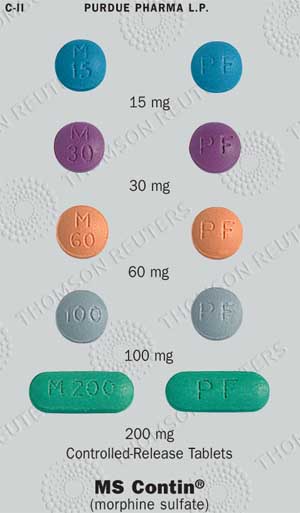
The cause of all this wretchedness? Two tiny, beautiful blue pills a day — MS Contin 15's.  The best little pain reliever in the whole wide world! Until you have to give it up, that is.

During the long months of my mini-allo, morphine made me happy. I thought, if the transplant kills me, my dying a junkie would hardly matter. If I survive, I can painlessly wean myself to Vicodin, then reduce the level until I can truly assess the residual pain. No, not with a stupid number from one to ten, as nurses seem to want these days, but with the direct experience of the irreducible pain acquired from myeloma and its routine treatment (mostly bone pain and neuropathy), pain from the transplant, and pain from the vicissitudes of life. Maybe I can endure what remains, maybe I'll still need pain pills. In any case, I might emerge clear-headed and better able to do the many things that have been on the back burner for nearly a year. Like figuring my taxes for 2009.

What I am describing is the agony of the "painless weaning" part of the morphine experience. Although, as I describe it, I can feel the Vicodin kicking in, knocking the edge off. I don't like Vicodin. I don't like Oxycontin either — it's way too harsh. Give me morphine any time! Didn't you hear me? GIVE ME MORPHINE!

(sigh)

Every day for four months I was asked, on a scale of one to ten, how's your pain? So I tried to assign meaning to the numbers. First, the scale should run from zero to nine, zero meaning pain-free (or dead). Here is the whole scale. Feel free to suggest improvements in the comments.

0.  None. I can't feel a thing. Perhaps I'm asleep and dreaming all this.
1.  Ok, if I try, I can manage to be annoyed by the neuropathy in my feet.
3.  Damn, the neuropathy has spread to my fingers!
4.  There's nothing my Germanic will can't ignore.
5.  Ok, I'm only a quarter German. I need a pain pill!
6.  Go away! I can't cope with you right now!
7.  Where's the morphine IV push when I need it?
8.  I'm trying to dial 911 before hitting the floor.
9.  If at all possible, now would be a great time to believe in G-d.

Friday, November 26, 2010

Why Are There No Fat Zombies?

Zombies have serious nourishment problems. All the human flesh they gulp seems to do them no good. Maybe, when first bitten, there's meat on their bones. However, in a few hours, days or weeks, they tend to look like the guy on the right. Ever see a zombie, especially one who has just eaten someone, take a satisfied nap? I think not.

They have terrible digestive problems as well. Ever see a zombie sitting on the toilet reading a newspaper? Once again, I think not! Eventually they must fill up completely, leaving no more room for living flesh. What do they do then? I can't help but feel sorry for them.

By now you must be wondering, why is Lonnie writing about the plight of zombies?

Well, I took a steam bath today. But beforehand, for the first time since the allo, I looked rather thoroughly at myself in the mirror. When I went into the hospital I weighed 45 more pounds than when I came out. That, my friends, is serious weight loss. In fact, if you really want to lose those extra pounds but hate to diet and exercise, have an allogeneic transplant! I guarantee, if you survive, it will work.

My bones, especially those in my back, stick out like those of my zombie friend. I can't even sit in the most comfortable office chair ever, my Herman Miller Aeron, without developing serious pain. A recent MRI, where I had to lie on that hard, cold, flat plank, was, well, exquisitely painful. Also, I have no shoulders. And size 34 jeans fall off by themselves.

My ability to eat has improved considerably. When I first left the hospital most foods were repulsive. Even Jello tasted vile. I subsisted mainly on TPN, which is a colossal pain. Today, food once more tastes like food and I can eat a reasonable amount of it on most days. Like my poor zombie, though, it doesn't seem to be doing me a lot of good.

I'm not the most patient person on the planet, but I can be impatient longer than just about anyone else. Sadly, that's really not the same thing. I am getting stronger as I struggle to climb stairs, leave the wheelchair at home, and do as much for myself as I possibly can, but my backbone still sticks out like a dorsal fin.

I'd post a naked picture of me but someone would complain and I'd get shut down, which is a shame because my picture would help people understand rib anatomy. Want to see a femur?

Ok, I'm done whining. I know that, in a few weeks, if I don't overdo it, I'll have enough flesh to sit in a chair or lie on my back. By then I'll be complaining about something else.


Tuesday, November 16, 2010

An Ordinary Day

I woke up, drank coffee while reading the paper, ate a bowl of cereal. Swallowed my morning handful of pills.

Got myself dressed. It is still difficult to reach my toes, so donning socks is problematic, but after some contortions, I managed. Wearing my clothes, I look pretty good at 152 lbs, but without my clothes I look alarmingly thin. I lost 45lbs in hospital.

Walked unaided down the stairs to get in the car. Ivonne drove me to the hospital (I'm not quite ready to drive myself: I need more muscle for the pedals). For the first time, I walked to the doctor's office instead of using the wheelchair and sat in the waiting room just like everybody else.


On the way home Ivonne and I stopped at our favorite noodle shop for bowls of ramen. The soup was especially good today. We sat at the table for quite some time talking about how far we've come since the day we met, and how happy we were now. It seemed like a date. There was a lot of laughter, which was painful for Ivonne because she had a wisdom tooth extracted last week (they had to saw into the bone to get the stubborn thing out). She no longer looks quite like a chipmunk.

At home again, I found my neighbor fixing my lawnmower. John has taken care of my grass since last spring when I could no longer do it myself. He wheels out the trash on trash day and sweeps (and scrapes) the sidewalks. I did not ask him to do any of these things. He will take nothing in return. He and his wife are angels. He is a survivor of another kind of cancer. We had a good talk about that last year.

I was sure I wouldn't be able to climb the stairs after all the walking I did today, but up I went. I'm getting stronger.

I checked my email for everything I haven't been able to read since August. So many of my friends, new and old, were worried about me! I'm sorry I wasn't able to respond back then. There are so many emails I can't respond even now except to say I think of you as my extended family and am ever so thankful for you.

Tomorrow I have to do my taxes (from 2009, may Uncle Sam forgive me) and find out what we need to do to put the children in school. Every day I take a whack at the paperwork that I've ignored since, well, since January, really. It was an impressive pile but I'm nearing the bottom. I think about doing consulting work next year — but will anyone hire me in these difficult times?

In other words, it was a perfectly ordinary day, more-or-less like that of everyone else. I dealt with ordinary things in an ordinary way. I am happy. I'm in love. My step-children make me laugh. The cat's fur needs brushing.

My eyes tear up a little. I never thought I would ever see another ordinary day like today. It's another miracle.

Wednesday, November 10, 2010

Photographs you DON'T want to see


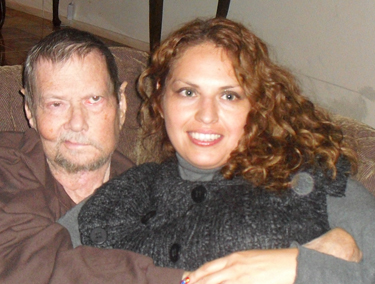
This is what I looked like a while back and 45lbs heavier, before the mini-allo transplant was even an idea. Recently, Ivonne showed me pictures of myself in the Intensive Care Unit. I was stunned, first at how awful I looked, then by the magnitude of the disaster I had survived.

Many of my dear friends visited me repeatedly in the ICU, even though my delirium prevented me from being aware of them. For a time it was rather obvious that I wasn't going to survive, what with heart problems (tachycardia, atrial fibrillation), kidney failure, pneumonia, liver dysfunction, and a severe gastrointestinal infection. I am profoundly touched that they wanted to be with me, but not one whit sorry to have wasted their time!

I have been reluctant to post Ivonne's pictures because I find them to be deeply disturbing. But perhaps you'll see them differently. I did promise to record everything about the transplant (I failed), so I put the pictures in this post after a big gap. You can decide for yourselves if you want to look at them. (If you click on them, I believe they will enlarge.)

[I remember trying to use my laptop, which was on the over-bed table just a few inches above me. Although I struggled mightily, I did not have the strength to lift my arm high enough to reach the keyboard. That's one reason I couldn't post a daily diary of events.]

One picture is rather fuzzy but I included it because it shows something like eleven drugs being infused into me at the same time.

Meanwhile, here's one I can put here:
Not Dead, Just Hiding


Wednesday, October 27, 2010

Devotion

Last night my wife, Ivonne, told me about events that happened after I returned to the transplant unit from one of my extended stays in the ICU. I remember somewhere between nothing and very little of that time, being either unconscious or lost in hallucination (in mine, I was being interrogated by agents of the government who accused me of having leaked super-classified information to the press).

Ivonne related that, for more than three days, I was constantly trying to tear out the IVs and remove my air mask and other treatment devices, a behavior I witnessed years before when my late mother-in-law was given a shot of atropine after a heart attack. Back then, my ex-wife and I stood at her unconscious mother's bedside for five or six hours preventing her from disconnecting everything that was keeping her alive; however, she was relentless. When we were both thoroughly exhausted, with great reluctance we left her to the nurses, who in all probability restrained her, something we couldn't bear to witness.

Back in my room, when I was behaving just like my late mother-in-law, Ivonne stood by the bed protecting me from myself. She told me it was quite difficult because I was very strong and very determined: it was a fight the whole time. She kept at it until a nurse asked her, when is the last time you had some sleep?

"I don't know, maybe a couple of days, I don't remember," she replied as she continued to struggle with me.

The bed next to him isn't being used, why not get some sleep?

"I can't—he keeps trying to pull out his IVs!"

Don't worry, the nurse replied, we'll get a sitter. Shortly afterward the sitter arrived, pulled up a chair, and was ready to take over. Still Ivonne would not stop, could not stop. Finally, the sitter told her,

"Look. I'm here, I'm going to stay here, he's going to be OK, I'll wake you up if there's any change, get some sleep!"

With that, Ivonne finally let go, fell into the bed next to mine like a big tree, falling asleep the instant her head hit the pillow. She slept for nine hours.

To my old friends: when I married a Mexicana thirty-one years younger than myself, and with whom I had almost nothing in common (language, culture, nationality, economic status, formal education, etc.), you were afraid that I might have completely lost my mind—what do you think now? As she told me this story, as the complete devotion it revealed sank in, tears silently dripped down my cheeks. A day later, as I write this, they're here again.

I feel like the luckiest man on earth.